
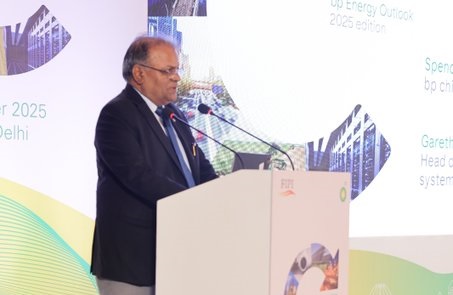
Mr. Arun Kumar Singh, Chairman & CEO, ONGC and Chairman, FIPI, delivered the welcome address at the annual bp Energy Outlook 2025 event, extending a warm welcome to all dignitaries and participants.
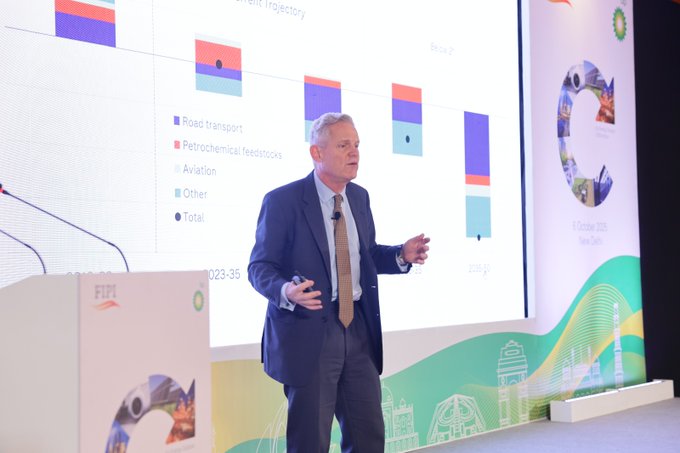
Mr. Spencer Dale, Chief Economist, bp, presented the bp Energy Outlook 2025 edition, providing an insightful overview of the evolving global and Indian energy landscape.
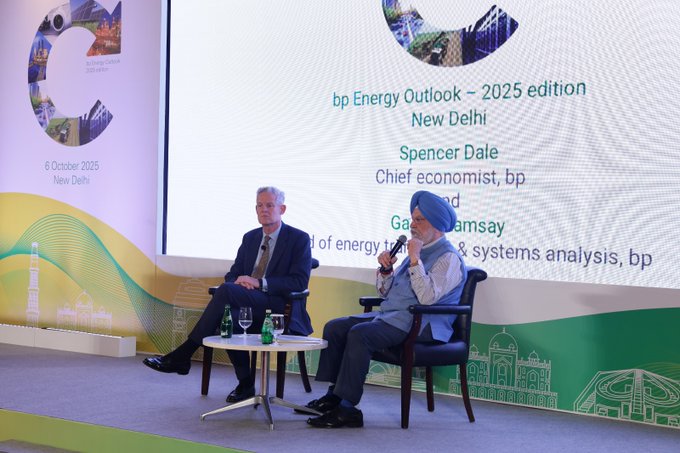
Our Chief Guest, Mr. Hardeep Singh Puri, Hon’ble Union Minister for Petroleum and Natural Gas, addressed the distinguished gathering at the bp Energy Outlook 2025 event.
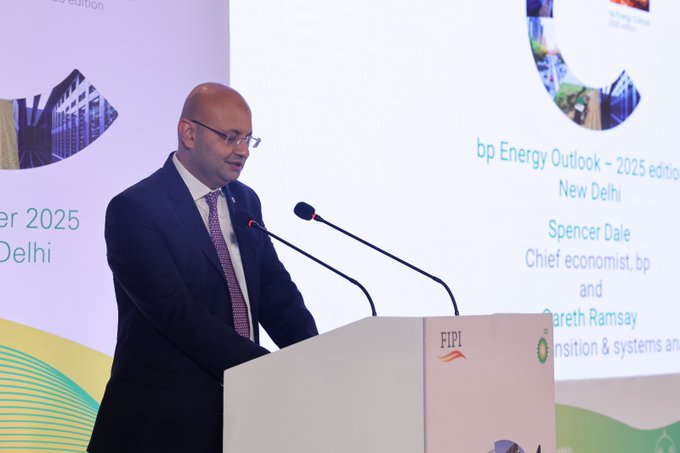
Mr. Kartikeya Dube, Head of Country – India Region, bp Group, delivered the Vote of Thanks. In his concluding remarks, he expressed heartfelt gratitude to all the distinguished industry leaders, policymakers, and participants for their valuable presence and insightful contributions.
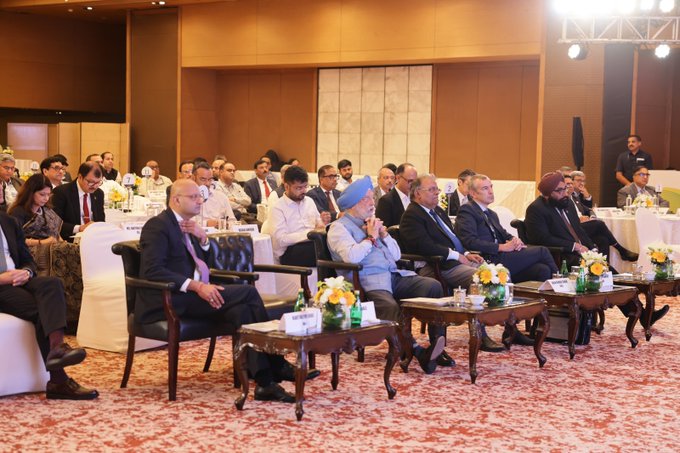
The "bp Energy Outlook 2025", co-hosted by bp and FIPI, witnessed an overwhelming participation of distinguished industry leaders, policymakers and dignitaries from across the energy sector.
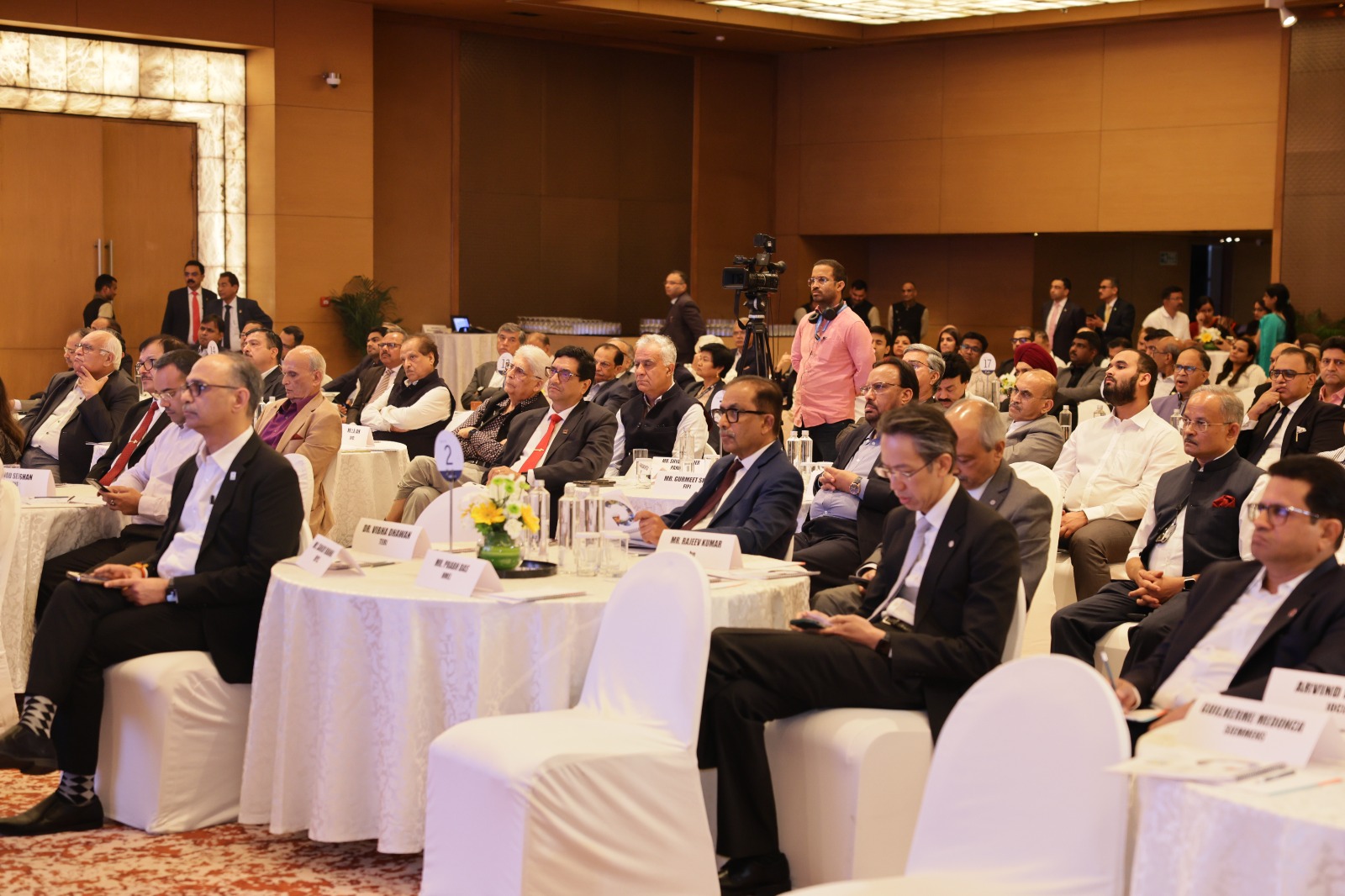
Section of the participants.
06-October-2025
The event witnessed strong participation from industry leaders, policymakers, and analysts. The discussions provided deep insights into global and Indian energy trends, the evolving policy and technology landscape, and the opportunities and challenges shaping the world’s transition toward cleaner and more secure energy systems.
Mr. Arun Kumar Singh welcomed the gathering and highlighted India’s strong macroeconomic fundamentals, rapidly growing energy needs, and the importance of cost efficiency in enabling a sustainable and inclusive energy transition. He emphasized that India is poised to remain one of the most attractive destinations for global energy investment over the next several decades.
The centrepiece of the event was the detailed presentation by Mr. Spencer Dale, who introduced the bp Energy Outlook 2025 and provided an in-depth, data-driven analysis of global and Indian energy transitions based on two key scenarios:
Some of the key takeaways on India’s Energy Scenario from his presentation are as follows:
He explained that India, like many fast-growing economies, will need to navigate these uncertainties while balancing affordability, security, and sustainability.
Q&A Session
Mr. Dale engaged in a highly interactive Q&A session. He elaborated on:
Address by the Chief Guest – Shri Hardeep Singh Puri, Hon’ble Minister of Petroleum & Natural Gas
Hon’ble Minister of Petroleum and Natural Gas Shri Hardeep Singh Puri appreciated the high-quality analysis presented in the Outlook and highlighted the importance of government policy in shaping India’s energy future. He briefly noted India’s major policy successes such as:
He reaffirmed India’s commitment to a multi-pathway, technology-driven transition that balances growth, sustainability, and energy security.
Vote of Thanks – Mr. Kartikeya Dube
Mr. Kartikeya Dube, Head of Country – India, bp, expressed gratitude to the dignitaries and participants. He emphasised that the insights shared during the session will be instrumental in shaping India’s long-term energy strategy and deepening collaboration across the sector.
Webinar on Recent Judicial Developments in Internationa..
14th Annual Convention of FIPI Student Chapters ..
Webinar on Oilfield Equipment Leasing- a permissible ac..
Webinar on “LNG at the Crossroads: Fundamentals and P..
Webinar on An overview of API standardization and certi..
FIPI Post Budget Analysis 2026..
FIPI Annual Awards 2024-25- A Glimpse of Winners..
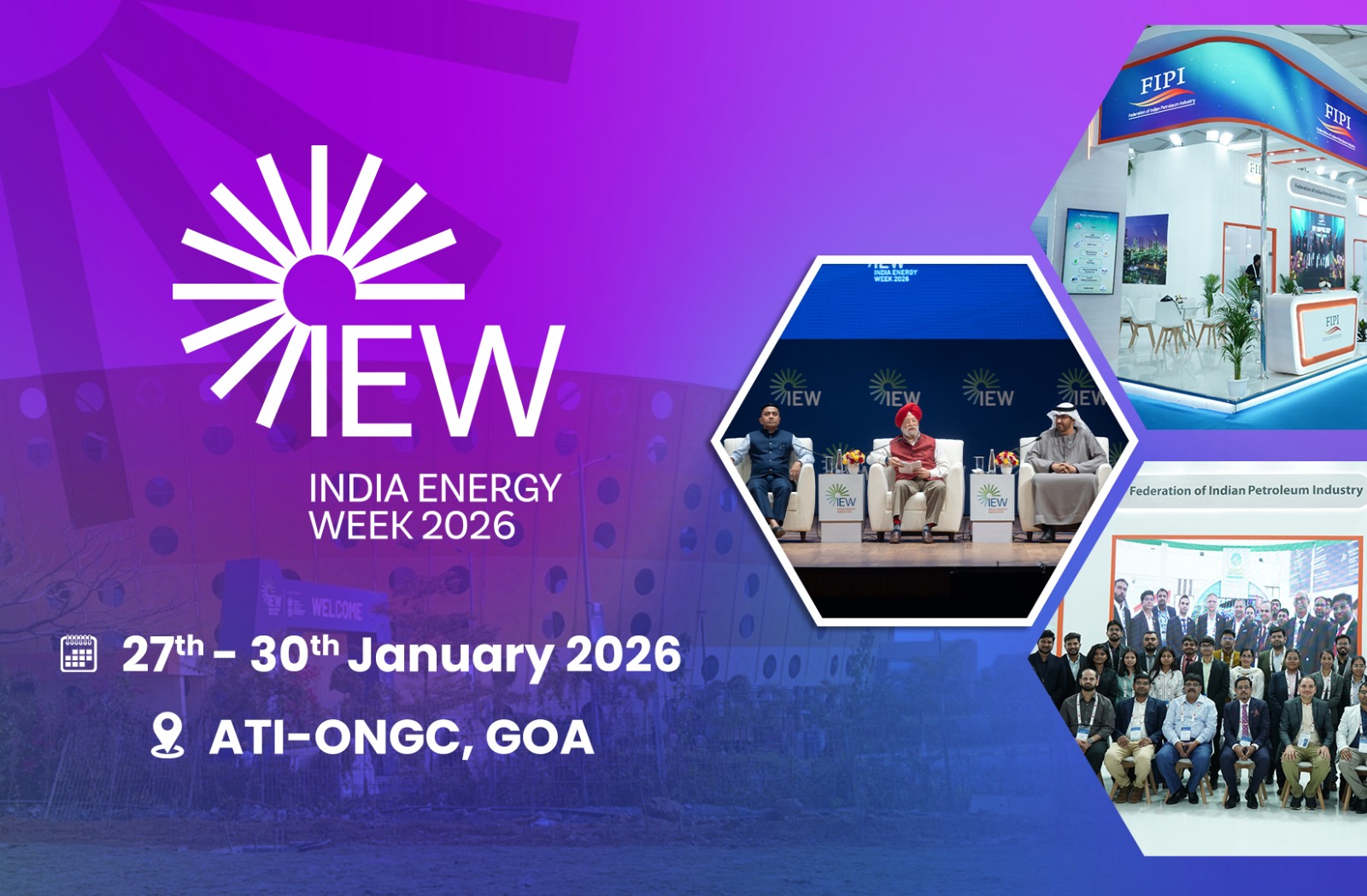
India Energy Week 2026..
Webinar on Building Cyber Resilience in India’s Oil &..
Webinar on new Indian Labour Codes..