
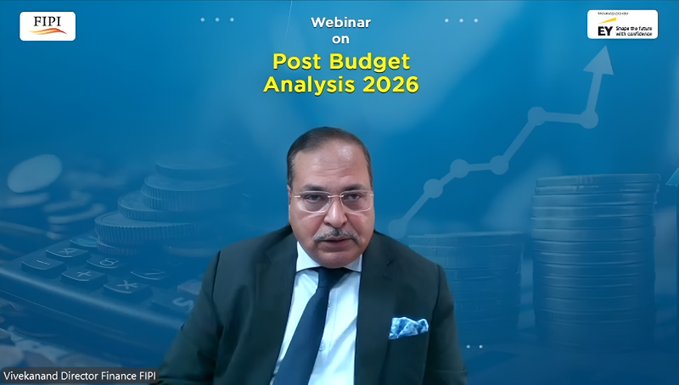
Shri Vivekanand, Director (Finance, Taxation & Legal), FIPI, in his opening remarks, warmly welcomed the eminent speakers from EY India, distinguished panelists from the Oil & Gas sector and all participants who joined the webinar on “Post Budget Analysis 2026” virtually.
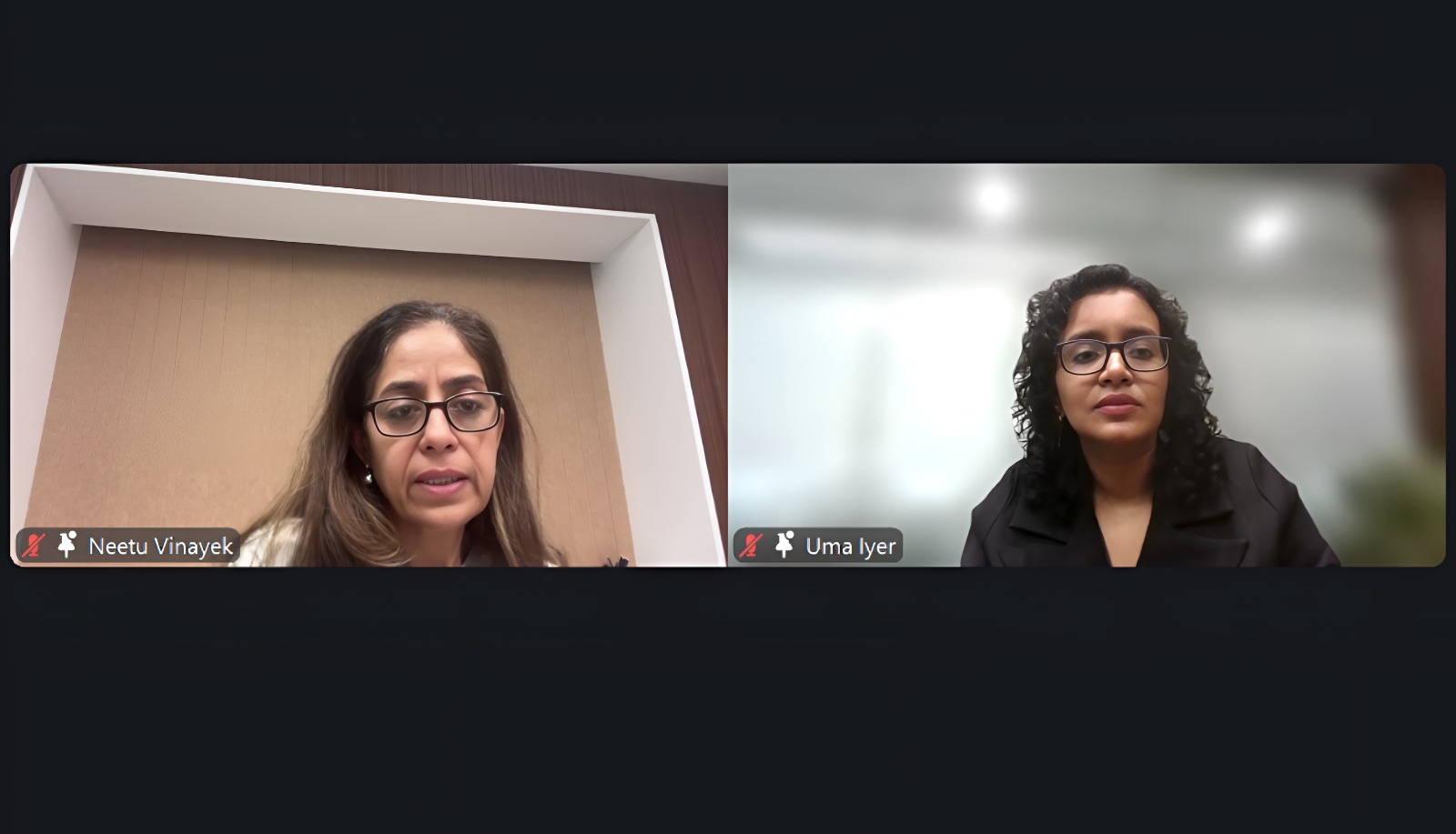
During the webinar on “Post Budget Analysis 2026” eminent speakers Ms. Neetu Vinayek, Partner, EY; Mr. Hiten Sutar, Partner Direct Tax, EY; and Ms. Uma Iyer, Partner Indirect Tax, EY delivered an in-depth presentation on the Economic Survey and key Union Budget 2026 announcements.
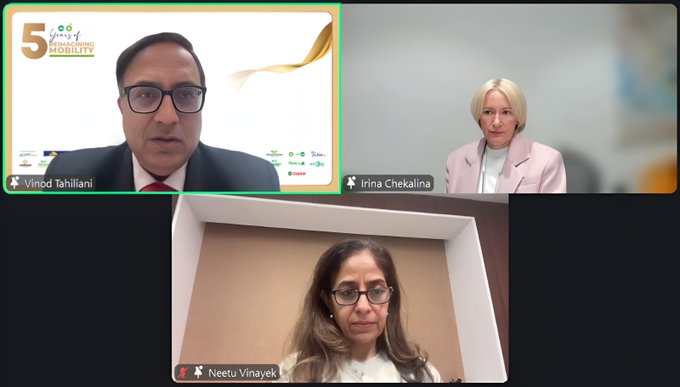
The panel discussion, moderated by Ms. Neetu Vinayek, Partner, EY India, featured distinguished panelists Mr. Vinod Tahiliani, CFO, RBML, and Ms. Irina Chekalina, Director Finance, SLB India, Bangladesh & Sri Lanka. The panel welcomed the Union Budget and highlighted its long-term vision, emphasizing a strong focus on strengthening the manufacturing and infrastructure sectors, while reinforcing domestic growth and ensuring overall economic stability.
03-February-2026
In his opening remarks, Mr. Vivekanand, Director (Finance, Taxation and Legal), FIPI, welcomed all the panelists during the budget analysis session organized by FIPI. He said that the Union Budget 2026-27 presented by the Hon’ble Finance Minister is a growth-oriented budget as the Indian economy is expected to grow in the range of 6.8% - 7.2% for FY 2027. He said that the inflation outlook remains benign, supported by favorable supply side conditions and the gradual pass-through of GST rate rationalization. Further, the FTA signed earlier with the EU, and announcement of US trade agreement also promises future growth opportunities for India.
He mentioned that the budget encompasses coordinated fiscal, monetary, and structural policies which have reinforced macroeconomic stability while supporting investment, consumption, and inclusion. Some of the noteworthy developments announced in the Budget include a massive increase in public capex to ₹12.2 lakh crore in FY2026-27, reiterating the commitment to stay on the course of fiscal consolidation with projected fiscal deficit of 4.3% and projection of a decline in the debt- to- GDP ratio at 55.6% in FY 2027. Being a Yuva Shakti–driven Budget, it emphasizes strengthening of domestic manufacturing, scaling high-growth services, and recognizing MSMEs as a vital engine of growth. Further, he highlighted that the Budget framework introduced several promising initiatives for the energy sector, focusing on accelerating India's transition to net-zero such as a proposed outlay of ₹20,000 crore over the next five years in promoting Carbon Capture Utilization and Storage (CCUS), extension of basic customs duty exemption on capital goods used for manufacturing lithium-ion cells for batteries, exemption of custom duty from imports of sodium antimonate used in the manufacture of solar glass, extending the existing basic customs duty exemption on imports of goods required for nuclear power projects till 2035, and excluding the entire value of biogas while calculating central excise duty on biogas-blended compressed natural gas.
Setting the context for the session, Ms. Neetu Vinayek, Partner, EY, presented the results of the pre-budget survey that was conducted by FIPI prior to the release of Union Budget 2026-27. The survey showed that most of the respondents were of the view that budget would bring in favorable reforms through extension of basic custom duty exemption on imports for Oil & Gas sector, allocation of significant funds to enhance energy security, as well as ensuring a higher push to public and private investment especially in emerging technologies like AI and digital innovation. This proved in sync with the budget announcement of customs duty exemptions and improved infrastructure investment to support energy transition.
Further, she highlighted the critical aspects mentioned in the Economic Survey. With robust GDP estimated by IMF at 7.3% in FY 26 against the projected global GDP growth at 3.3%, India’s macroeconomic fundamentals viz- inflation, fiscal deficit as well as forex reserves have also shown stable performance during FY 26. Talking about the tax collections, she said that the growth of tax collections in FY 2025 was 9.5%, but in comparison, the growth is expected to go down to 7.4% in FY 2026 which would then pick up in FY 2027 to 8%. This is largely attributed to GST rationalization.
She then highlighted that the Union Budget 2026-27 sustains India's economic growth strategy by raising capital expenditure to a record ₹12.2 lakh crore, marking an 11.5% increase y-oy to accelerate infrastructure and job creation. While increasing capex, the fiscal deficit is projected to drop to 4.3% in FY 2027 from 4.4% in FY 2026 indicating a balanced approach within revenue and expenses.
Further, she said that the Union Budget placed a strong emphasis on accelerating India's energy transition, securing critical mineral supply chains, and boosting domestic manufacturing in the renewable sector. Key highlights include a ₹20,000 crore initiative for Carbon Capture, Utilization, and Storage (CCUS) which is to be used over the next 5 years to ensure that there is large-scale deployment of the CCUS technologies, in hard-to-abate sectors, including the refineries. She also mentioned that the budget laid emphasis on transforming the country into a global manufacturing hub for high-tech and strategic sectors, with a major focus on biopharma, electronics components, and semiconductors.
In the financial sector, the individual persons resident outside India are now permitted to invest in listed equites under Portfolio Investment Scheme with enhanced investment limits from 5% to 10%, and the aggregate limit increased from 10% to 24%. In addition, a comprehensive review of FDI regulations have been mentioned in the Budget to ensure that there is an easy and friendly framework for the foreign investors. Further, she said there has been increased focus on Micro, Small and Medium Enterprises (MSME) with a sanctioned equity support of Rs. 10,000 crores towards creating future champions.
Talking about direct tax proposals, she said there is no change in the corporate tax and individual tax rates, and the Income Tax Act 2025 will be applicable, with effect from 1st April 26. Other individual tax proposals include - the non-resident individuals who are coming to India for work, for 5 years, their foreign global income would not be subject to tax in India; resident individuals purchasing property from non-resident sellers can deduct TDS by quoting PAN and will no longer need to obtain a TAN; exemption from capital gains in respect of income arising from redemption from Sovereign Gold Bonds (SGBs) would be available only for original subscribers and not for secondary buyers. She also highlighted about the Foreign Assets of Small Taxpayers Disclosure Scheme being announced to facilitate voluntary compliance for undisclosed foreign assets and/or foreign income upto prescribed thresholds.
Mr. Hiten Sutar, Partner EY highlighted the corporate tax amendments. He said that there were no changes in corporate tax rates for domestic and foreign companies. However, with respect to Minimum Alternate Tax (MAT) provisions, it is proposed that MAT rate be reduced to 14% of book profit from existing 15%. Also, it is proposed that tax paid under MAT provisions be made final tax in the old regime and no new MAT credit may be allowed. Further, if any domestic company is going under new regime from 01 April 2026, then MAT credit can be can be set-off to the extent of 25% of tax liability and the balance can be carried forward and set-off in subsequent years subject to 25% restrictions in each of the subsequent years. This is also subject to overall limit of 15 years immediately succeeding the tax year in which the tax credit first became allowable. . So, this provision, he said, encourages companies to move from old regime to new regime. He then pointed out the extension in tax holiday period for units set up in Gift City. Currently, any unit which was set up in GIFT City’s International Financial Services Centre (IFSC), has an option of claiming tax holidays for 10 years, which is 100% tax relief. It is now proposed that the tax holiday is to be extended to 20 years and when the company is not in the tax holiday period, the tax rate will be 15%,. In terms of buyback tax, currently buyback is taxed as deemed dividend in the hands of recipient shareholders, and with an entitlement of capital loss for the cost of share bought back, but now it is proposed to treat buyback as capital gains in the hands of shareholders. He said that if this capital gains are in the hands of domestic promoter entities, then the capital gains tax rate would be 22% and in case of other promoters, the tax rate would increase to 30%.
He then mentioned a welcome move for IT categories and the Global Capability Centre (GCC) in Information T categories, where the government has rationalized safe harbour rules. Currently, software development, ITES, knowledge process outsourcing and contract R&D services for software development are considered separate categories, with differing safe harbor margins ranging from 17% to 24%. Now, the government has proposed to club all these activities in a single category of IT services with a common safe harbour margin of 15.5% and the threshold for availing such safe harbour has also been enhanced from Rs. 300 crores to Rs. 2,000 crores. He added that currently there is no prescribed time-limit for conclusion of Unilateral Advance Pricing Agreements (UAPAs). The budget proposed that UAPAs for IT services shall be fast-tracked to be concluded within 2 years, extendable by 6 months at the taxpayer’s request.
Further, he mentioned that the due dates for filing revised return have been increased from 9 months from the end of the relevant tax year to 12 months from the end of the relevant tax year. So, while earlier, the original due date for filing returns for companies were majorly 31st October or 30th November; and with one or two months as the case may be given for filing a revised return, now the time is increased from 31st December to 31st March of the next year. Further, updated return can be filed even after the reassessment notices are issued by paying 10% more as an additional tax which means more benefits are given to the taxpayer to file their updated returns . He also talked about the Tax Collected at Source (TCS) rate on the sale of scrap, along with alcoholic liquor and specified minerals (coal, lignite, iron ore), which has increased from 1% to 2%. This change aims to simplify the TCS framework by creating a uniform rate across several categories. He also highlighted certain rationalization measures such as issuance of a single composite assessment and penalty, with interest deferred till appellate outcome. Pre-payment requirement for filing an appeal is proposed to be reduced from 20% to 10%. Further, currently failure to furnish Transfer Pricing Audit report (Form 3CEB) attracts a penalty of INR 100,00. It is now proposed to levy a graded fee of INR 50,000 for delay up to one month and INR 100,000 thereafter. He also highlighted that it is proposed to include manpower supply within the scope of “work” to remove ambiguity on whether such payments constitute “payment to contractors” or “fees for professional and technical services,” thereby subjecting them to the applicable withholding tax rate of 1% or 2%.
Ms. Uma Iyer, Partner, EY highlighted the provisions made under the indirect tax. Talking about GST proposals, she said that the place of supply for intermediary services will be governed by the default rule under Section 13(2) of the IGST Act, which is the location of the recipient of services. Further, intermediary services provided to a foreign service recipient will qualify as export of services and thus be classified as zero-rated supplies. This means no 18% GST will be applicable on such services. Also, she said that post sale discount value deductible subject to GST credit note is being issued. Further, it is proposed that the Government may empower an existing Authority (which also includes a Tribunal) as the National Appellate Authority for Advance Rulings, which will be an interim authority to resolve any of these AAR-related disputes when there are conflicting decisions.
Talking about custom proposals, she mentioned changes are primarily based on four stated pillars- simplification of tariff structures, support to domestic manufacturing, promote export competitiveness and correction of duty inclusion. Further, several customs duty exemptions for the oil and gas sector, including those for vessels and raw materials, are undergoing changes, with some expiring on 31st March 2026 are being extended till 31st March 2028.
She then said that the government has made significant moves to boost domestic manufacturing in the power sector and open the nuclear industry. The government has extended the basic customs duty exemption on imports of goods required for nuclear power projects until 2035.
She then talked about the concept of authorized economic operator which is like a certification from customs. She said that currently an authorized economic operator would get a deferred payment cycle of customs duty in 15 days. This has now been extended to a month, which not only enhances the cash flow mechanism, but it also reduces procedural hassles of regular customs payment. Also, such duty deferral facility is proposed to be extended to ‘eligible manufacturer-importer’. From a special economic zone perspective, she said that there is a one-time facilitation measure for eligible manufacturing units in SEZ to sell goods in DTA at concessional duty rates, subject to conditions.
To promote green fuels, she mentioned that the Budget announced exclusion of biogas/CBG value and related GST included in blended CNG from excise duty valuation. Also, she mentioned that the implementation of levy of additional duty on unblended diesel has been deferred till 31st March 2028.
The presentation on budget was followed by ‘Panel Discussion on Union Budget 2026-27, focusing on the outcome for oil and gas companies in the Union budget. The panel comprised of Mr. Vinod Tahiliani, CFO, RBML and Ms. Irina Chekalina, Director of Finance, SLB India, Bangladesh & Sri-Lanka. The panel discussion was moderated by Ms. Neetu Vinayek, Partner, EY.
The panelists were of the view that the Union Budget 2026-27 is strategically designed for long-term stability and growth by bolstering domestic fundamentals, particularly through increased infrastructure capital expenditure and enhanced manufacturing competitiveness in a volatile global environment. Further, the panelists highlighted that the Indian government has recognized the importance of GCCs and they have transitioned from cost-focused back-office units into strategic, innovation-driven, and value-adding hubs for many organizations in India.
Further, the panelists were of the view that the GST Council’s decision to hike the tax rate on exploration, mining, and drilling services from 12% to 18% is set to increase upstream costs for oil and gas companies and exacerbate the burden of stranded taxes because the final products—crude oil and natural gas—remain outside the GST net, preventing input tax credit (ITC) offset. Lastly, they were of the view that the industry is indeed navigating a shift between maintaining its capital-intensive core and adopting digital intelligence/ AI for non-core or supporting business processes and as such AI bringing in this space more about augmenting human expertise to enhance safety and efficiency.
Ms. Uma Iyer and Ms. Neetu Vinayek from EY conducted the Q&A session and provided their views and opinions on various queries posted by participants. In the concluding remarks, FIPI thanked all the panelists and the subject matter experts for providing their insights on the Union Budget 2026-27 and its implications on the oil & gas industry and the economy.

Webinar on Consultation paper on “Framework for Leasi..

Global Energy Leadership Dialogue - 'Energy Security Re..

Webinar on Recent Judicial Developments in Internationa..

Webinar on API Low Carbon Standards ..

14th Annual Convention of FIPI Student Chapters ..

Webinar on Oilfield Equipment Leasing- a permissible ac..

Webinar on “LNG at the Crossroads: Fundamentals and P..

Webinar on An overview of API standardization and certi..
FIPI Post Budget Analysis 2026..

FIPI Annual Awards 2024-25- A Glimpse of Winners..