


Page 19 - Policy Economic Report- June'26
P. 19
POLICY AND ECONOMIC REPORT
               OIL & GAS MARKET

           El Niño is typically associated with below-normal rainfall across parts of South and Southeast Asia and
           Australia, and above-normal rainfall in parts of the Americas, resulting in disruptions to agricultural output
           and water availability. Reduced production of key food commodities such as rice, wheat, maize, sugar,
           edible oils, and coffee could contribute to higher global food prices and renewed inflationary pressures,
           particularly in emerging and developing economies where food accounts for a significant share of
           household expenditure. Climate-related disruptions to agricultural supply chains may also affect global
           trade flows and increase volatility in commodity markets.

           Beyond agriculture, El Niño is expected to have important implications for global energy systems. Lower
           reservoir levels may reduce hydropower generation in several countries, increasing dependence on
           thermal power generation and natural gas. Higher temperatures are also likely to raise electricity demand
           for cooling, adding pressure on power systems and fuel markets during peak demand periods. These
           developments could reinforce existing energy security concerns, increase fossil fuel consumption, and
           contribute to higher energy costs for both households and industry.

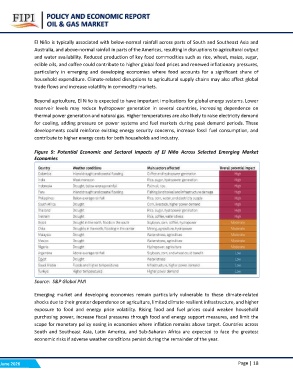
           Figure 9: Potential Economic and Sectoral Impacts of El Niño Across Selected Emerging Market
           Economies

           Source: S&P Global PMI

           Emerging market and developing economies remain particularly vulnerable to these climate-related
           shocks due to their greater dependence on agriculture, limited climate-resilient infrastructure, and higher
           exposure to food and energy price volatility. Rising food and fuel prices could weaken household
           purchasing power, increase fiscal pressures through food and energy support measures, and limit the
           scope for monetary policy easing in economies where inflation remains above target. Countries across
           South and Southeast Asia, Latin America, and Sub-Saharan Africa are expected to face the greatest
           economic risks if adverse weather conditions persist during the remainder of the year.

June 2026  Page | 18

