


Page 11 - Policy Economic Report - March 2026
P. 11
POLICY AND ECONOMIC REPORT
                OIL & GAS MARKET

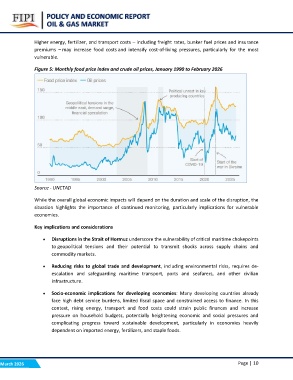
            Higher energy, fertilizer, and transport costs – including freight rates, bunker fuel prices and insurance
            premiums – may increase food costs and intensify cost-of-living pressures, particularly for the most
            vulnerable.

            Figure 5: Monthly food price index and crude oil prices, January 1990 to February 2026

            Source - UNCTAD

            While the overall global economic impacts will depend on the duration and scale of the disruption, the
            situation highlights the importance of continued monitoring, particularly implications for vulnerable
            economies.

            Key implications and considerations

                ? Disruptions in the Strait of Hormuz underscore the vulnerability of critical maritime chokepoints
                     to geopolitical tensions and their potential to transmit shocks across supply chains and
                     commodity markets.

                ? Reducing risks to global trade and development, including environmental risks, requires de-
                     escalation and safeguarding maritime transport, ports and seafarers, and other civilian
                     infrastructure.

                ? Socio-economic implications for developing economies: Many developing countries already
                     face high debt service burdens, limited fiscal space and constrained access to finance. In this
                     context, rising energy, transport and food costs could strain public finances and increase
                     pressure on household budgets, potentially heightening economic and social pressures and
                     complicating progress toward sustainable development, particularly in economies heavily
                     dependent on imported energy, fertilizers, and staple foods.

March 2026  Page | 10

